Protect the Perimeter
Finding the right outdoor cameras to fit your customer's needs


Outdoor IP cameras have become the backbone of modern perimeter security. For today's integrators, they're not just tools for capturing footage—they're active systems designed to detect, deter, and document threats in real time. Whether you're designing a full security camera system for a commercial property or upgrading outdoor security cameras at a home, the shift is clear: customers expect proactive protection, not just recorded evidence.
At the core, outdoor IP cameras use network connectivity to transmit high-quality video, enabling remote access, intelligent alerts, and seamless integration with broader security platforms. But the real value lies in how these systems extend visibility beyond walls—creating a first line of defense around the perimeter.
Expanded options like floodlight cameras take this even further, combining illumination with surveillance to actively discourage intrusions before they escalate.
Perimeter protection is exactly what it sounds like: securing the outer boundary of a property before a threat reaches the building itself. It's the first—and often most critical—layer of any security strategy.
Outdoor security cameras play a central role in detecting activity early. Instead of reacting after an incident, they allow property owners to monitor, verify, and respond in real time. This applies across a wide range of environments:
A complete security camera system strengthens this approach by eliminating blind spots and ensuring continuous coverage. Integrators who design with overlap, proper angles, and layered technologies create systems that don't just see threats, they anticipate them.
— Forest Liu, Senior Director of Product Management – Safety
Floodlight cameras play a key role here. By combining bright, motion-activated lighting with video capture, they increase visibility and send a clear signal to intruders: they've been seen.
Not all outdoor IP cameras are created equal. Integrators need to evaluate features based on the environment, risk level, and customer expectations.
Outdoor cameras must be able to withstand rain, dust, heat, and cold. Look for high IP ratings, such as IP67 or higher, to ensure long-term reliability.
Traditional infrared (IR) works well, but newer cameras offer full-color night imaging. This is especially valuable for identifying details like clothing or vehicles.
Basic motion detection is no longer enough. AI-driven analytics can distinguish between people, vehicles, and environmental movement, reducing false alarms and improving response times.
— Forest Liu, Senior Director of Product Management – Safety
Higher resolution means clearer evidence. For large areas or critical zones, 4K cameras provide the detail needed for identification.
While Ethernet is stable, reliable, and ideal for permanent installations, Wi-Fi is flexible and faster to deploy in challenging locations.
Wi-Fi-enabled cameras allow users to monitor live feeds and receive alerts from anywhere—an increasingly expected feature.
Many customers prefer security cameras without subscription fees. Offering local storage options (NVRs, SD cards) can be a strong selling point.
Solar-powered, wireless outdoor cameras are useful for remote or hard-to-wire areas, though they require careful placement and planning.
Cameras with built-in lights, sirens, and alerts add an active layer of protection, especially in low-traffic areas.
Choosing between wired and wireless solutions comes down to the site and the customer's priorities.
Wired systems offer unmatched reliability. They're less susceptible to interference and are ideal for large-scale or mission-critical installations. Once installed, they provide consistent performance with minimal maintenance.
Wireless cameras are easier and faster to install, making them ideal for smaller projects or locations where running cables isn't practical. They also offer flexibility for repositioning as needs change.
For many integrators, the best solution isn't one or the other; it's a hybrid approach. For example, a wired backbone can support critical coverage, while wireless cameras fill in gaps or extend coverage to remote areas.
Floodlight cameras often fit naturally into this mix, especially at entry points and vulnerable zones where both visibility and deterrence are essential.
Different environments require different camera types. Matching the right hardware to the application is what separates a good install from a great one.
These are the industry standard. They're reliable, cost-effective, and suitable for most applications, especially when paired with IR night vision.
Hybrid models combine IR with full-color night capabilities, offering better visibility and identification in low-light conditions.
For wide-area coverage, 360-degree cameras reduce the number of devices needed to eliminate blind spots. They're ideal for open spaces like warehouses or parking lots.
Floodlight cameras bring a dual-purpose advantage: illumination and surveillance. They're particularly effective in areas where lighting is inconsistent or where traditional IR can be compromised.
— Forest Liu, Senior Director of Product Management – Safety
A successful installation starts with a clear understanding of the site and the risks.
 |
Evaluate the property layout Identify entry points, blind spots, and high-risk zones. Map out coverage to ensure complete perimeter visibility. |
|
Choose wired vs. wireless strategically Don't default to one approach. Use wired cameras where reliability is critical and wireless where flexibility is needed. |
|
Assess lighting conditions Ambient light, reflective surfaces (like signage or water), and vehicle headlights can all impact performance. Plan accordingly with the right camera types and placement. |
|
Understand storage preferences Some customers want cloud-based access, while others prefer systems without subscriptions. Offer options that align with their priorities. |
|
Incorporate deterrence Think beyond monitoring. Place floodlight cameras in areas where visibility and active deterrence can prevent incidents altogether. |
|
Balance performance, scalability, and budget A system should meet current needs while allowing for future expansion. Avoid overbuilding—but don't cut corners on critical coverage. |
In the end, the goal is simple: deliver a system that doesn't just record incidents but helps prevent them. When integrators combine the right mix of camera types, intelligent features, and strategic placement, they create perimeter protection that customers can trust—and see working every day.

Outdoor IP cameras capture digital video and transmit it over a network for remote viewing and recording.
A floodlight camera combines a security camera with motion-activated lighting. It's ideal for driveways, entrances, and dark perimeter zones where visibility and deterrence are equally important.
Most outdoor cameras should be IP65 or higher, with IP66 or IP67 recommended for harsh weather conditions.
An IP camera is any network-connected camera, while a Wi-Fi camera is a wireless subtype of an IP camera.
They serve different purposes. Floodlight cameras add active deterrence through lighting, while standard cameras often focus on broader coverage or discreet monitoring. Many systems are used together.
Yes. Many support local storage through NVRs or SD cards without monthly fees.
Options include PoE, solar-powered systems, and battery-powered wireless setups depending on installation needs.
1080p minimum, with 4MP or 4K recommended. Wide-angle lenses (100°–180°) are ideal for perimeter coverage.
They depend on network stability, can require more setup, may introduce cybersecurity risks if not secured properly, and use more bandwidth at higher resolutions.
Remote management is essential for today's surveillance deployments, especially for integrators supporting multiple systems and sites. While most cameras offer basic remote access, advanced platforms like OvrC provide deeper visibility into system health, network status, and device performance. This allows integrators to monitor, troubleshoot, update, and optimize systems off-site, often before issues impact the customer. The result is fewer service calls, faster issue resolution, and more scalable and profitable service delivery.
Shop outdoor IP cameras at ADI Global Distribution
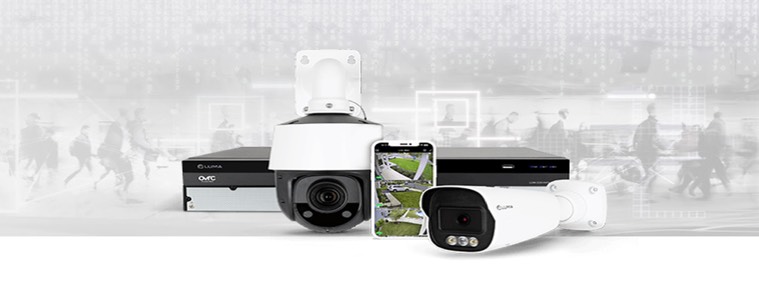
Discover how Luma's robust product line offers scalable surveillance solutions for residential and commercial applications, plus remote management via OvrC.
Learn More
Learn how OvrC empowers integrators to install, monitor, configure, and troubleshoot network and connected devices easily from anywhere, reducing service calls and improving system reliability.
Learn More
Discover the Luma X20 Series, purpose-built for outdoor performance. With advanced AI and streamlined installation, it delivers reliability your customers can count on.
Watch Video